
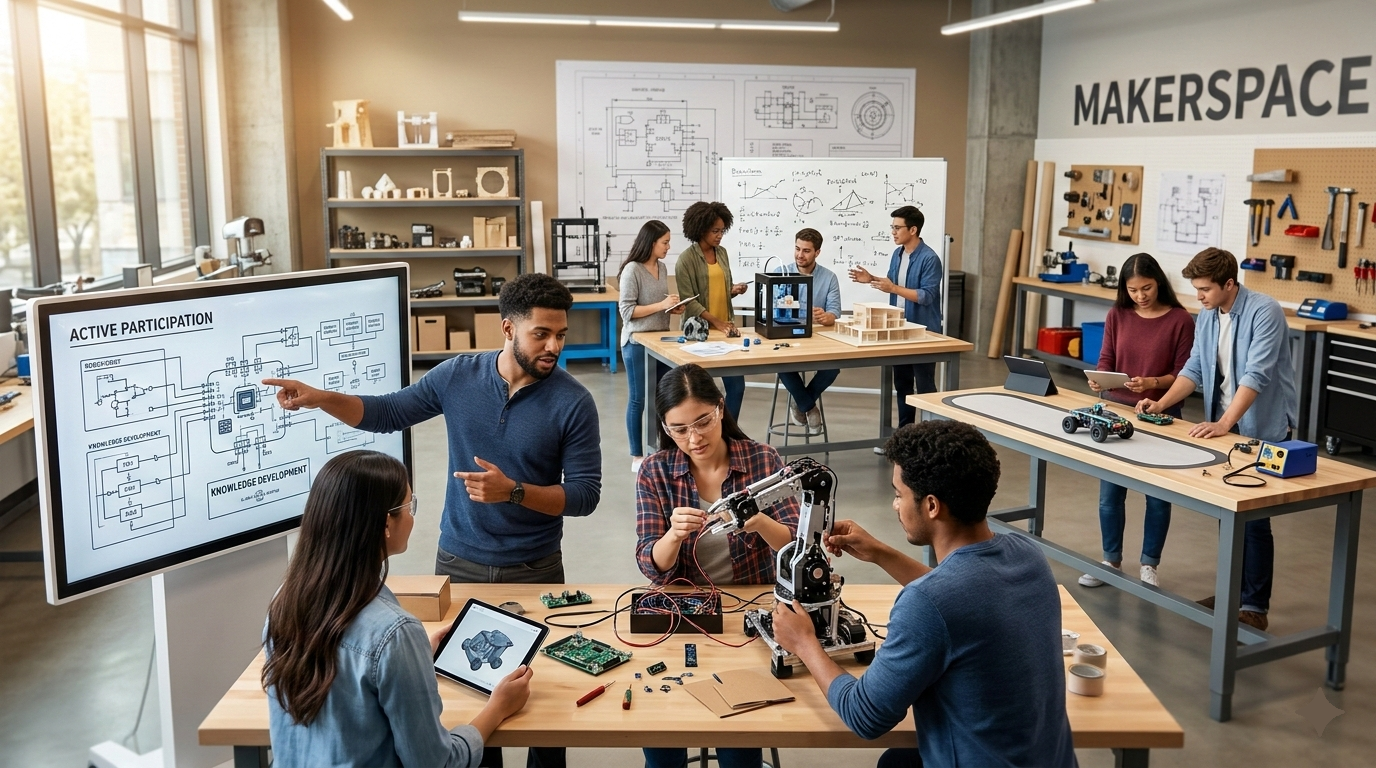
In today’s fast-paced world, simply memorizing information doesn’t cut it anymore. Employers want skills. Educators want results. Learners want relevance. That’s exactly where duaction steps in and flips the script.
Duaction is an educational concept that blends the words “dual” and “action.” At its core, it focuses on combining theoretical learning with practical application at the same time. Instead of separating classroom study from real-world practice, duaction encourages learners to develop knowledge and hands-on skills simultaneously. And honestly? It just makes sense.
Rather than sitting through passive lectures and hoping the information sticks, learners actively engage, experiment, apply, reflect, and adapt. It’s learning by doing — but with structure and purpose.
Let’s dive deeper into what duaction really means, why it matters, and how it’s reshaping education, business, and technology.
What Is Duaction? A Clear Definition
Duaction is a dynamic educational approach that promotes the simultaneous development of knowledge and practical skills through active participation. It challenges traditional teaching models that focus heavily on theory before allowing any real-world application.
Instead of “learn now, apply later,” duaction says:
Learn and apply at the same time.
This approach ensures that students don’t just understand concepts in theory — they can actually use them. Whether it’s solving real business problems, building tech prototypes, or engaging in collaborative projects, duaction bridges the gap between knowing and doing.
In simple terms, duaction transforms learners from passive receivers of information into active participants in their own growth.
The Core Philosophy Behind Duaction
The foundation of duaction rests on a powerful belief: learning sticks better when it’s experienced.
Traditional systems often rely on lectures, textbooks, and exams. While these methods have value, they can sometimes promote rote memorization rather than deep understanding. Duaction shifts the focus toward immersive engagement.
Here’s what drives the philosophy:
-
Active experimentation
-
Reflection on experience
-
Immediate application of theory
-
Continuous feedback and improvement
By engaging both the mind and the hands, learners build stronger neural connections. They don’t just remember information — they internalize it.
Key Principles of Duaction
To truly understand duaction, we need to look at its guiding principles.
1. Integration of Theory and Practice
Duaction doesn’t treat theory and practice as separate stages. Instead, it merges them. A business student might learn about marketing strategies and immediately design a live campaign. A tech learner could study coding concepts while building an actual app.
This integration reinforces understanding and reduces the “forgetting curve” that often follows purely theoretical lessons.
2. Learning Through Experimentation
Experimentation is at the heart of duaction. Learners are encouraged to test ideas, make mistakes, adjust, and try again.
Failure isn’t punished — it’s analyzed.
This trial-and-error process builds confidence and resilience. More importantly, it develops problem-solving skills that traditional memorization-based systems rarely cultivate.
3. Reflection as a Growth Tool
Action alone isn’t enough. Reflection turns experience into wisdom.
Duaction emphasizes structured reflection. After completing a project or activity, learners analyze:
-
What worked?
-
What didn’t?
-
Why did it happen?
-
How can it improve?
This reflective cycle strengthens critical thinking and helps transform experience into long-term knowledge.
4. Collaboration and Engagement
Duaction thrives in interactive environments. Group discussions, team projects, simulations, and peer feedback create dynamic learning ecosystems.
Collaborative activities mirror real workplace environments, preparing learners for professional teamwork and communication.
5. Real-World Relevance
Perhaps the most powerful principle of duaction is relevance.
Learning becomes meaningful when it connects to real-world challenges. Whether solving community issues, launching mock startups, or participating in industry internships, learners see the impact of their work.
That relevance fuels motivation — and motivated learners perform better.
How Duaction Differs from Traditional Learning
Let’s be honest — traditional education often revolves around lectures, note-taking, and standardized tests. Students memorize information, pass exams, and sometimes forget everything shortly afterward.
Duaction takes a different route.
| Traditional Learning | Duaction Approach |
|---|---|
| Passive listening | Active engagement |
| Theory-first | Theory + action simultaneously |
| Memorization-based | Application-focused |
| Delayed practice | Immediate practice |
| Limited real-world exposure | Immersive real-world integration |
Instead of prioritizing grades alone, duaction prioritizes growth, capability, and adaptability.
Benefits of Duaction
The advantages of duaction are both immediate and long-term. It doesn’t just improve academic performance — it builds real-life competence.
1. Deeper Understanding
When learners apply concepts immediately, comprehension improves dramatically. They see how abstract ideas function in practical settings, which strengthens retention.
2. Stronger Problem-Solving Skills
Facing real challenges forces learners to think critically. Instead of choosing answers from multiple-choice options, they develop solutions from scratch.
That’s a skill that pays off in any career.
3. Increased Adaptability
The world changes fast. Industries evolve. Technology advances. Duaction prepares individuals to adapt by encouraging experimentation and flexibility.
Learners become comfortable navigating uncertainty — and that’s a superpower in modern workplaces.
4. Enhanced Confidence
There’s something empowering about building, creating, and solving problems hands-on. Duaction builds confidence because learners see tangible results from their efforts.
They don’t just say, “I studied this.”
They say, “I’ve done this.”
5. Better Career Preparation
Employers increasingly seek candidates who can demonstrate practical experience. Duaction equips learners with portfolios, projects, and real-case exposure that make them job-ready from day one.
Applications of Duaction in Different Fields
Duaction isn’t limited to classrooms. Its principles apply across industries.
Education
Schools and universities can integrate project-based learning, internships, lab simulations, and real-world case studies into curricula.
Instead of separating learning from doing, they blend both seamlessly.
Business
Corporate training programs can adopt duaction by combining workshops with live projects. Employees learn new strategies while applying them to actual company challenges.
This boosts productivity and learning outcomes simultaneously.
Technology
In tech fields, duaction feels almost natural. Developers learn coding languages while building functional software. Data analysts study theory while working on real datasets.
Hands-on immersion accelerates skill mastery.
Entrepreneurship
Aspiring entrepreneurs benefit immensely from duaction. Rather than only studying business models, they launch pilot projects, test markets, and refine strategies in real time.
That’s where real learning happens.
Why Duaction Matters in the Modern World
We live in an era where information is everywhere. Anyone can Google definitions. But applying knowledge effectively? That’s the real challenge.
Duaction addresses the growing gap between academic knowledge and practical skill. It recognizes that understanding without execution has limited value.
In a rapidly evolving global economy, adaptability, creativity, and problem-solving matter more than memorized facts. Duaction nurtures exactly those abilities.
It transforms learners into thinkers.
Thinkers into doers.
And doers into innovators.
The Future of Learning with Duaction
As education systems modernize, concepts like duaction are becoming increasingly relevant. Blended learning models, digital simulations, interactive platforms, and experiential programs are already moving in this direction.
The future likely won’t eliminate theory — nor should it. Theory provides structure and foundation. But theory without action is incomplete.
Duaction represents balance.
And balance, in education, changes everything.
Conclusion
Duaction is more than just a trendy educational buzzword. It’s a transformative approach that blends theoretical knowledge with hands-on application to create meaningful learning experiences.
By emphasizing experimentation, reflection, collaboration, and real-world relevance, duaction prepares individuals for genuine challenges — not just exams.
It shifts education from passive memorization to active participation. From isolated theory to practical mastery.
In a world that demands agility and innovation, duaction offers a clear path forward. It doesn’t just teach people what to think. It teaches them how to think — and how to act.
And that combination? That’s powerful.
Frequently Asked Questions (FAQs)
1. What does duaction mean?
Duaction combines “dual” and “action,” referring to an educational approach that integrates theoretical learning with practical application at the same time.
2. How is duaction different from traditional education?
Traditional education often separates theory from practice and relies on memorization. Duaction merges learning and doing simultaneously, focusing on active engagement and real-world experience.
3. What are the main benefits of duaction?
Duaction enhances understanding, improves problem-solving skills, builds confidence, fosters adaptability, and prepares learners for real-world challenges.
4. Can duaction be applied outside of schools?
Yes. Businesses, tech industries, and entrepreneurial programs can implement duaction by combining training with live projects and hands-on activities.
5. Why is duaction important today?
In a rapidly changing world, practical skills and adaptability are crucial. Duaction helps learners bridge the gap between knowledge and execution, making them better prepared for modern careers.


