
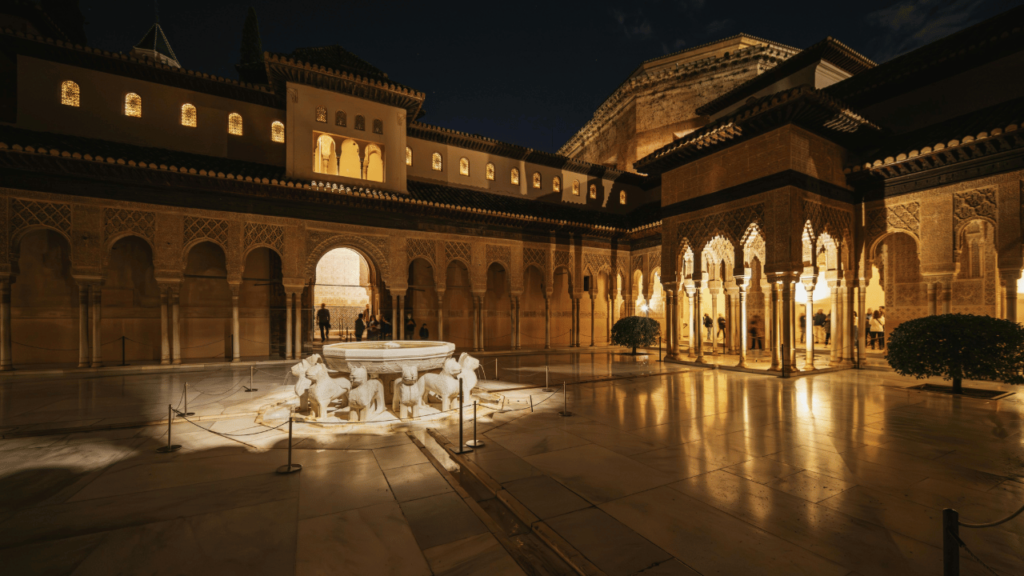
The Alhambra Palace night tour attendance revenue has become an increasingly important part of how one of Spain’s most iconic historic sites sustains itself financially. While this UNESCO World Heritage site is famous for its daytime crowds and labyrinth of Moorish architecture, its evening visits bring a unique atmospheric appeal that not only delights visitors, but also contributes significantly to the Alhambra’s overall economic impact. In this article, we’ll explore how many people attend these tours, how much revenue they generate, why they matter, and what the future might hold for them.
The Appeal of Night Tours at the Alhambra
Evening tours offer a very different experience from daytime visits. Walking through the Nasrid Palaces and the lush gardens of the Generalife under artificial lighting — and sometimes moonlight — creates an intimate atmosphere incomparable to the bustling daytime scene. For many visitors, this exclusivity enhances the cultural and aesthetic value of the visit, making night tours highly sought-after despite the smaller attendance numbers.
These night tours are carefully managed and capped by strict conservation policies to minimize wear and tear on the centuries-old structures. Rather than aiming for maximum attendance, the focus is on delivering quality experiences that justify the tickets’ premium prices and contribute meaningfully to the site’s finances.
Attendance Patterns: How Many People Visit at Night?
When examining Alhambra Palace night tour attendance revenue, the number of visitors is a key part of the story. Although annual attendance for the Alhambra site as a whole exceeds 2.5 million people, night tours account for a much smaller share of this total — typically about 120,000 to 150,000 visitors each year.
This means that only roughly 5–6% of all annual visitors access the site in the evening — yet they make a proportionally larger contribution to revenue per head than daytime visitors. Night tours operate on selected evenings, often from spring through autumn with a heavier schedule in peak months, while winter operations may be limited to weekends or paused entirely.
Attendance isn’t merely random. On Friday and Saturday nights — especially during peak tourism months — booking windows often sell out quickly. This reflects both high demand and limited capacity, which conservation considerations intentionally enforce.
How Night Tours Contribute to Revenue
Despite the lower absolute number of visitors compared to daytime tours, night tours punch above their weight financially. Estimates of annual Alhambra Palace night tour attendance revenue generally fall in the range of €8 million to €12 million per year.
Several factors contribute to this strong financial performance:
-
Premium Pricing: While standard daytime tickets are priced for accessibility, night tours often command higher prices (such as €12–€13 for standard night entry and higher rates for guided or private experiences).
-
Supplementary Services: Many visitors choose guided tours or bundled packages that raise the average spend per person. Even additional services like audio guides and seasonal special events drive revenue higher.
-
Visitor Behavior: Night visitors often engage more with ancillary services such as gift shops, restaurants, or extended stays in Granada, which adds indirect economic benefits to the community beyond ticket sales.
Together, these elements create a revenue stream that may represent 15–20% of the Alhambra’s total income from ticketing, even though night tours represent only a small fraction of total attendance.
Why Night Tours Matter Beyond Numbers
There’s more to the value of night tours than simple ticketing figures. The Alhambra Palace night tour attendance revenue helps fund conservation projects, operational costs, and educational programs. Since the site is a public heritage institution rather than a private business, revenue flows directly back into maintaining and preserving this fragile structure.
In many years, revenue from night tours has supported restoration work, improvements to visitor systems, and staff training — efforts that benefit all visitors, whether they come by day or by night. This reinvestment underscores how cultural heritage can be both economically sustainable and responsibly maintained.
Seasonal Trends and Future Prospects
Seasonality plays a significant role in Alhambra Palace night tour attendance revenue. Night tours thrive during warmer months when visitors enjoy pleasant evening temperatures, and attendance tends to dip in colder seasons with shorter nights. By tailoring the schedule to align with demand — like offering extended twilight tours in spring and summer — the Alhambra maximizes both attendance and revenue potential.
Looking forward, there’s potential for further growth in night tour revenue as tourism trends evolve and interest in unique cultural experiences increases. Innovations like special full-moon tours or premium packages could expand offerings while still respecting conservation limits.
Frequently Asked Questions (FAQs)
Q: How many people attend Alhambra night tours each year?
A: Night tours attract roughly 120,000 to 150,000 visitors annually, making up about 5–6% of total Alhambra visitors.
Q: How much revenue do night tours at the Alhambra generate?
A: Estimates suggest that Alhambra Palace night tour attendance revenue ranges from €8 million to €12 million per year, thanks to ticket pricing and high demand.
Q: Why are night tours limited in attendance?
A: Conservation and preservation needs restrict the number of visitors to protect delicate historic surfaces and avoid overcrowding. Limited slots also help maintain a high-quality visitor experience.
Q: Are night tour tickets more expensive than daytime tickets?
A: Yes, standard night tickets often cost slightly more than daytime entry, and premium guided or private tours can cost substantially higher.
Q: Do night tours support the local economy?
A: Absolutely. Night visitors typically spend more on food, transportation, and lodging, boosting Granada’s broader tourism economy in addition to the direct revenue from ticket sales.
In summary, Alhambra Palace night tour attendance revenue illustrates how even limited-access cultural experiences can be financially impactful and culturally enriching. By blending careful visitor management with strategic pricing and reinvestment into conservation, these moonlit tours enrich both visitors and the heritage site itself.


